Saturday, September 30, 2023

Irrigation Concerns? What, me worry?

There is no question that we are in the midst of drought in Western NC.  In Highlands, where we normally average close to 100" of rain per year (and even had 139" three years ago), we've only received 53" of rain year to date.  This means that if the same trend continues for the next three months, we'll finish the year just shy of 70" of rain for the 12-month period.  The question I've been asked is, "would we ever run out of irrigation water?"

Let me first say that we finished our new irrigation system at a perfect time!  Water conservation on golf courses starts with a well designed, efficient irrigation system.  We are using far less water this year compared to years past.  I do want to remind you however, that even the best irrigation systems are designed to supplement natural rainfall, not replace it.


In the past, I've said many times that water will be the #1 issue facing golf in the next 10 years.  As you know, in most parts of the country, water is a sacred natural resource that is to be used wisely.  It is in Highlands as well, but with our rainfall norms, it's always plentiful.  In that regard, we are fortunate.  

Could Highlands CC ever run out of irrigation water?  Well, never say never.  However,  it's extremely unlikely!  We are are fortunate to have a 8-acre lake on the property that is fed from groundwater and streams from a number of directions.  In my 23 years at HCC, we've been through several droughts and I have never seen the lake where water wasn't flowing over the dam at Hudson Road.  That would be our first major warning.  If water stopped coming over the dam, I'd know immediately that we are using more water than can be naturally replenished each day.  Again, I'm not saying it couldn't happen but it's never happened before.  Our lake holds roughly 10,500,000 gallons of water.  An average irrigation cycle in the evening, assuming we irrigated wall to wall, will use approximately 250,000 gallons.  This means (theoretically, of course) we could sustain ourselves for 82 days (assuming we irrigate every other night) if all water was cut off, flowing into Club Lake.  Again, highly unlikely!

Also unlikely is the Town of Highlands or the State of NC placing water restrictions on the Club.  In the past, local government has asked citizens to conserve water but actual restrictions have never been put into place (in Highlands) that would affect the commercial use of water, that I am aware of.  I say this wearing both my resident and commissioner hats.  We do want to be mindful that Club Lake does flow into Lake Sequoyah (and is a major source of water to the lake), the Town of Highlands drinking water source, and we always want to be good neighbors.  You might be asking yourself, don't we own Club Lake and can't we do with it what we want?  The answer is a little complicated.  According to the State of NC, we do own the lake but not the water in the lake.  They control that.  This is why technically, a North Carolina fishing license is required to fish on Club property.  Obama, in his 2nd term, introduced WOTUS (Waters of the United States), which would have led to federal government oversight of our lake and nightmare for a variety of reasons.  Fortunately, that didn't go far, after he left office.  Let me also say, it is important to remember that 70" of rain in a year sounds like a reason to panic to us but relative to other areas of the country, it is a massive amount of rainfall for a 12 month period!  

To conclude, here are a couple worst case scenarios to consider.  Let's say we were in a massive water crisis and we faced water restrictions.  Sure, the golf course might turn a little brown, but it's nothing that can't ultimately recover.  Our Greens and tees would become priority #1 and we could resort to hand-watering these areas only to use the least amount of water possible and most efficiently.  The most likely scenario we could face, is if our pumpstation, which supplies water to the golf course, were to suffer from a missile strike from a Russian drone.  If that occurred, we have a plan in place for that as well.  Hydroseeders and other water holding tanks that we have access to could be used to hold us over until the water started flowing again.  Using these resources, we would go in crisis mode with the only objective, keeping putting greens alive until we got to a point where it started raining again or the irrigation was repaired.  

Drought is something we must always take serious and have contingency plans in place for, but the reality that we'd ever need to resort to those plans in Highlands, is highly unlikely.  Finally, autumn is the best time of year for drought because water requirements are so much less compared to other times of year.  The sun angles are lower and the days are shorter.  This means the grass isn't consuming water like it would in July and August and water also isn't evaporating from the soil as quickly as it was over the summer.  Keeping up with wilted turf in areas is very easy this time of year.  Historically, the month of September and early October are typically dry.  Rest assured, it wont be long before we are back to saying, "Gosh, I wish it would stop raining!"  Until then, enjoy the ball rolling out on your drives of the tee!


No rain is sight in the next 7 days!

Golf Course Walking Facts

 Attention Golf Course Walkers:

Are you tired of being followed by the golf maintenance staff in the morning?  Are you tired of going home with wet feet from having to move over into the grass to allow traffic to pass?  We have the solution!  The staff always works in order of the holes each morning in order to stay ahead of play.  Therefore, if you walk the golf course in reverse (18-1) you will only have to see each of us one time.  Plus, it is much safer because you do not have the cart traffic sneaking up behind you.  Consider this next time you enjoy the golf course first thing in the morning!  Of course, you must account for 8:00am tee times...this would particularly be an issue on the front nine holes.  Happy walking and stay healthy!  

 The front nine cart paths……..1.85 miles
The back nine cart paths……..1.77 miles
 
Total golf course miles3.62 miles
 
Cobb Road is approximately 1.5 miles one way.

Thursday, September 28, 2023

Fall Decorations

Ever year, we do our best to do something creative at the Club to celebrate the fall season.  This year, Matthew Green (Equipment Tech) was able to get us these giant hay bales from a friend of his who owns a farm.  Incidentally, if you are ever in the market for a giant hay bale, they cost about $80/ea.  That's something I wondered a better part of my life and today marked the first time in 45 years that I purchased one!  These great decorations (only one is shown as our gnome is still under construction and will be completed tomorrow- so stay tuned!) are the result of the hard work of Rita Crawford and Hilary Stiehler, my better half!  There is no question that autumn is the best time to be in the mountains! 


Tuesday, September 26, 2023

Seeder in Action

Last winter, we purchased a seeder for our fairways.  You can see by these photos that were taken on the practice tee, where the seed is germinating from the small grooves that were created by the machine.  The same thing is happening below our fairways and this newer variety of Creeping Bentgrass will gradually improve the turf stand on our fairways.

Monday, September 25, 2023

Monday


With a successful Men's Member Guest Tournament behind us, it's back to agronomics this week.  First off, kudos to my entire team for the work they put into the golf course for the tournament. There is so much that goes into events like this, behind the scenes.  Starting at 4:30AM is just one example of what's is required to prepare the golf course for a 9AM shotgun start.  With some staff living over 1 hour away, this equates to very little sleep for them.

Today, greens and approaches are receiving a light application of sand.  With the dry weather, we are back to irrigating the golf course.  Rain looks like it is in store for us by Wednesday, however.  Have a great week!

Tuesday, September 19, 2023

Good Reminder for all…


HCC Bear works OT

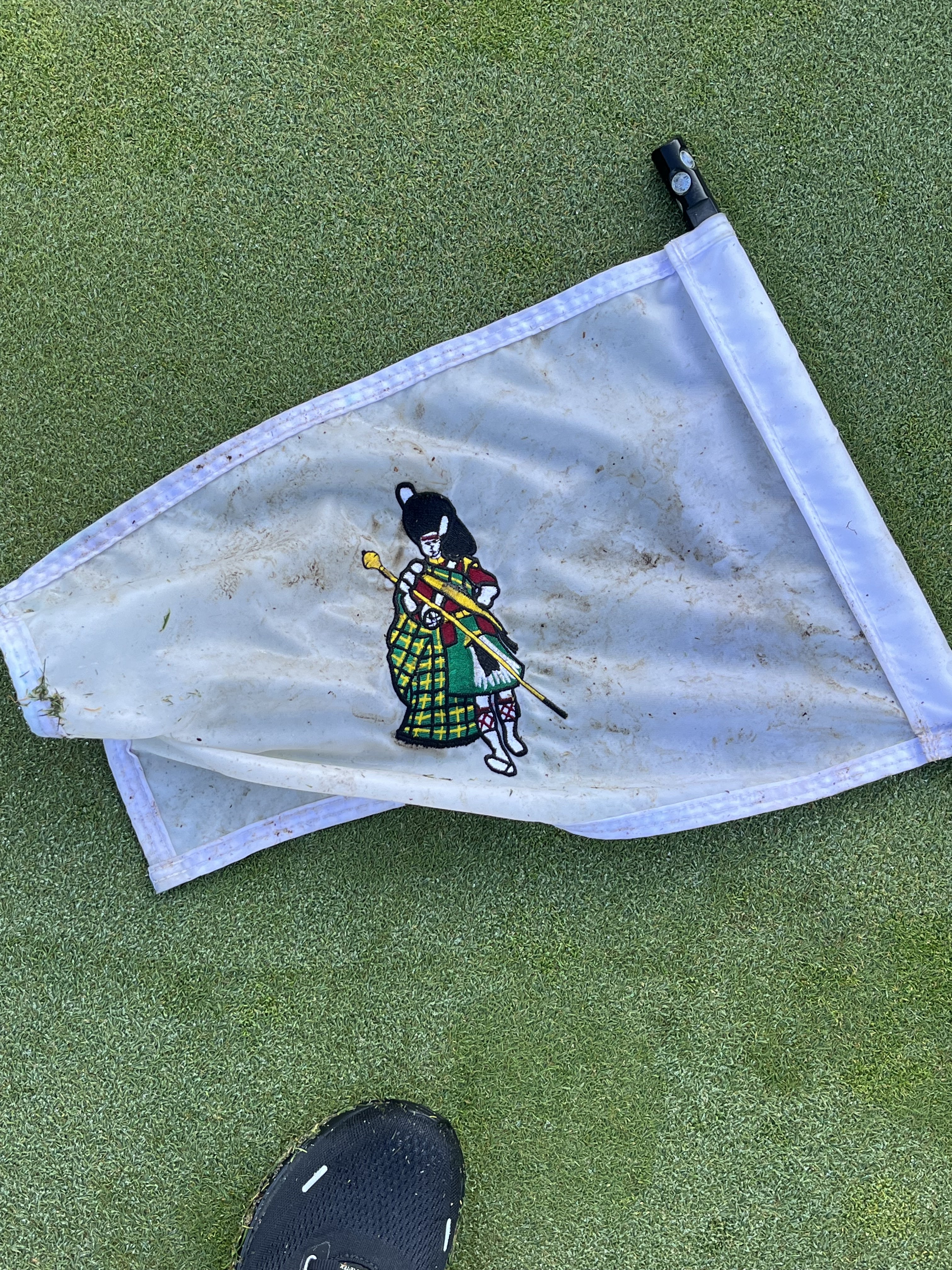
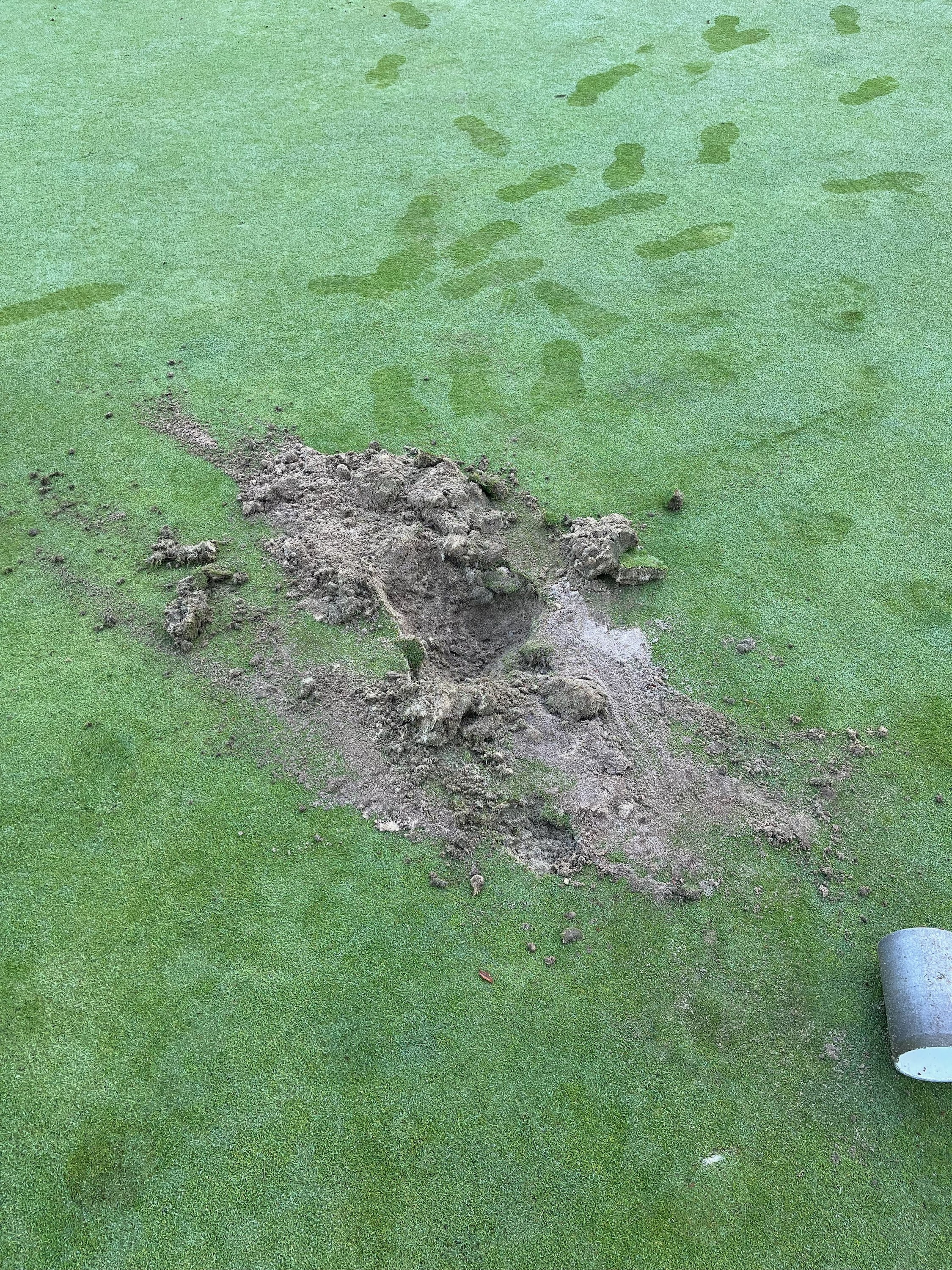
Our bear was active last night again, this time on the 2nd green.  There is minor damage to the green as you can see in the photo.  He cashed in the white flag and ate the yardage prism but everything else was in tact.  We may need to start bringing the flagsticks in at night!


He may have been trying to fix a ball mark? We should give him the benefit of the doubt.

Night Mowing


Such a cool photo taken by Billy Brooks on our team!  This was taken this morning as greens mowers were on the practice green. 

Monday, September 18, 2023

Understanding Poa annua

 Understanding Poa annua

September 15, 2023

David R. Huff, Ph.D., Penn State University

Poa annua can produce an exceptional putting surface given the right conditions. In fact, it’s the primary putting green turf at many U.S. Open courses. So why is Poa annua loved by some and disliked by many, and why is it so difficult to understand what makes this grass tick?

Key Takeaways

· All Poa annua plants are both annual and perennial at the same time, all the time. How it behaves on that spectrum is dictated by the growing environment and management program.

· Properties induced by the parent plant’s environmental growing conditions, like adaptations to mowing, are inherited by its seeded progeny.

· Poa annua adjusts its adaptation differently to different management strategies. This is the root of why it is so difficult to control, and why many have found it better to work with this grass rather than trying to eradicate it.

· Golf course trials are underway to evaluate improved varieties of Poa annua that could become commercially available.

Paul R. Latshaw, the legendary golf course superintendent who hosted a combined nine majors including the U.S. Open, PGA Championship and Masters, once told me: “Poa annua has probably saved more superintendents’ positions than it’s destroyed.” That’s a powerful statement and implies that the invasive nature of Poa annua often outweighs any lack of biotic or abiotic stress tolerance. He shared this insight with me back in 1998. At the time, I’d just started my Poa annua breeding program at Penn State to develop improved varieties for greens and fairways. He called to encourage me to “give it all you got, and never give up!” That’s because he knew what I was about to learn – being a proponent of Poa annua in the golf industry is like swimming against a riptide of disapproving popular opinion, and such rip currents can end badly for swimmers unless you know how to navigate them.

Poa annua, as I’ve come to learn, is not only our most controversial turfgrass species – in that a majority of the industry strive to eradicate it while many of the top-ranked golf courses in the U.S. propagate it – but it’s also one of the most scientifically interesting grasses I’ve ever worked on and it’s one of the hardest to understand agronomically. Poa annua is unlike any of our other turfgrass species, but once you begin to understand some fundamentals of its biology it can become a reliable ally, as Latshaw knew so well. In this article, I’ll attempt to explain the key aspects of Poa annua biology to help superintendents either propagate or eradicate it.

Researchers at Penn State have been exploring the genetics of Poa annua to better understand the biology and adaptability of this enigmatic grass.

Poa annua Unplugged

To begin, let’s examine where Poa annua grows naturally, unaided by golf course management practices. In 18th century England, Poa annua was observed to rapidly fill in the paths where humans regularly walked but was noticeably absent from the adjacent hillside meadows. Because of this habit, Poa annua became known as “path grass” in the U.S. during the early 1900s. Today, Poa annua continues this behavior by dominating hiking trials on Mount Kilimanjaro in Africa, campsites in Australia and dirt roads in China, all while being absent beyond a yard’s distance from the edge of these disturbed areas. Thus, Poa annua’s presence seems to be a biological indicator of human activity.

In addition, Poa annua has very few herbivore resistance mechanisms and serves as a common food source for grazing animals and migratory waterfowl like ducks and geese. Knowing its association with human travel, combined with its beneficial feed value for animals and birds with regional and global migratory routes, leads us to the unsurprising result that Poa annua has a world-wide distribution. However, what is surprising and what we need to learn is why Poa annua is so broadly adaptable to such a wide range of environmental conditions around the globe.

One of the main stumbling blocks that most superintendents and scientists have regarding Poa annua’s basic biology that limits their ability to either manage or control it is they’ve been taught that Poa annua exists in only one of two forms, it’s either annual or perennial. In fact, all Poa annua is both annual and perennial at the same time, all the time. Let me explain.

Poa annua has the genetic programming to behave like an annual and as a perennial depending on the situation.

Genetically, Poa annua is an allotetraploid species, which simply means that each of its cells contains the genetic material (genomes) of two different species. For Poa annua, these genomes have not had sufficient time to become blended together. The “mom” of Poa annua is Poa infirma, a truly annual species native to the Mediterranean where it grows and sets seed during the mild, moist winters and survives the cloudless, rainless summers as seed. The “dad” of Poa annua is Poa supina, a stoloniferous perennial species native to the mountainous regions of central Europe where it’s often managed as soccer fields and golf course fairways. Thus, in every cell of every Poa annua plant is the genetic programming to behave as an annual (like mom) and as a perennial (like dad), and in reality, it behaves as both at the same time, all the time.

Poa annua’s Superpower

Having annual and perennial life history characteristics in each of its cells enables Poa annua to exhibit some truly remarkable behaviors. For example, inheritance of “annuality” versus “perenniality” in Poa annua does not follow the three laws of Mendelian genetics – i.e., dominance, segregation and independent assortment – but rather by a new field of genetics known as “epigenetics” (La Mantia & Huff, 2011). In addition, management practices like mowing not only influence the growth habits of the mowed plants, but also influence the growth habits of their next generation’s seed progeny (Mao & Huff, 2012; Benson et al., 2021). Such phenomenon is known as “transgenerational memory," which is when epigenetic properties induced by the parent plant’s environmental growing conditions, like mowing, are being inherited by its seeded progeny. In other words, Poa annua plants “remember” if their parents were mowed or not. As I said, Poa annua is scientifically very interesting.

"In other words, Poa annua plants “remember” if their parents were mowed or not."

Finally, the underlying genetic programs of annuality and perenniality inherent in Poa annua have not had sufficient time to have become blended together but rather remain distinct and operate simultaneously under contrasting environmental conditions (Benson et al., 2023). Thus, it may be surmised that Poa annua’s “superpower” stems from a non-segregating, supercharged hybrid vigor for all of its life history characteristics. Hybrid vigor, or heterosis, is a powerful genetic feature resulting in enhanced performance and happens to be the basis of the modern U.S. corn industry. However, unlike corn where the effects of heterosis are lost after one generation due to segregation, heterosis in Poa annua does not segregate away and is thus maintained generation after generation.

As a result of its permanent heterosis, Poa annua has the ability to outperform either of its parental species. Poa annua can be a more successful annual than its annual parent (Poa infirma) by producing more seed at a faster rate, and it can be a more successful perennial than its perennial parent (Poa supina) in extreme environments, like low putting green mowing heights. In addition, because Poa annua has this supercharged hybrid vigor permanently built into its genetic makeup, it also has a supercharged ability to adapt to very different environmental conditions. For example, in the non-irrigated,

Mediterranean climate of California, Poa annua functions more successfully as an annual. However, in the consistently dry, windswept regions of Antarctica, Poa annua functions more successfully as a perennial. What’s truly remarkable is that this genetic potential for such extreme and varied adaptation is inherently present in each and every cell, of each and every Poa annua plant.

How To Manage Poa annua

Given this new understanding of Poa annua’s basic biology, let’s consider how it might be applied for its encouragement or discouragement on greens and fairways. For management purposes it’s more useful to think of Poa annua as having two different modes of reproduction: sexual reproduction via seed which is an annual life history characteristic, and vegetative reproduction via tillers which is a perennial life history characteristic. Poa annua modulates between these two modes of reproduction differently depending on the environmental conditions it encounters.

Whether Poa annua is considered a weed depends on the situation. This plant growing in a ‘419’ bermudagrass fairway in Florida needs to be eradicated.

The two main management parameters that guide Poa annua adaptation are mowing and disturbance. Without mowing, Poa annua has a difficult time outcompeting other grass species, it is after all “path grass.” However, under mowing heights of a few inches down to less than one-tenth of an inch, Poa annua proportionally increases its production of daughter tillers allowing it to compete against other grasses. When these mowed turfs are disturbed by core cultivation, vertical mowing, traffic and other stresses, Poa annua’s ability to flower and set seed under any mowing height gives it a competitive edge by quickly filling in the resulting voids with seed. Without regular disturbance, the opportunity for seedling establishment is reduced and Poa annua begins to reallocate its photosynthetic resources away from seed production and more toward vegetative daughter-tiller production, resulting in very high shoot density plants that are very low seed yielders. Thus, the type of Poa annua you have will depend on how you manage your playing surfaces.

Superintendents first need to determine the function they want their Poa annua to serve and then manage for that function, because Poa annua will adapt itself to any set of management conditions. When management plans are unclear and inconsistent, a highly variable population of Poa annua will result. Additional factors such as temperature and available soil moisture throughout a growing season will also tell Poa annua at which point along its spectrum of annual and perennial life history characteristics it needs to be. Therefore, these additional factors also need to be considered. For example, on non-irrigated bermudagrass fairways in Australia, Poa annua behaves as a winter annual and is actively managed by Australian superintendents as a low-cost winter playing surface, a technique once practiced long ago in the southern U.S. Don’t get caught up in wondering whether you have the annual or the perennial Poa annua, because unlike what we’ve been taught, it is not one or the other but rather a spectrum. The more appropriate questions to ask are, “How is Poa annua adapting to my current management practices and how can I best change my management strategies to either propagate or eradicate it?”

It should be clear by now that no matter what you do or how you manage your mowed playing surfaces, Poa annua has the ability to adapt. Thus, eradicating Poa annua is an extreme challenge and according to the International Herbicide-Resistant Weed Database, it has developed herbicide resistance to nine modes of action involving 23 different active chemistries, so chemical control seems limited. The best Poa annua-free bentgrass courses I’ve visited all have a “zero-tolerance” policy and physically remove each and every Poa annua invader with a knife or plugger and then transport it away from the playing surfaces.

"It should be clear by now that no matter what you do or how you manage your mowed playing surfaces, Poa annua has the ability to adapt."

Dr. Joe Vargas, a renowned turfgrass pathologist at Michigan State University, once said, “If Poa annua is so weak, what happened to your bentgrass?” Which was his way of letting people know that not all Poa annua is intolerant of stress. In my Poa annua breeding program, we’ve discovered naturally occurring resistance to biotic diseases like anthracnose, dollar spot and bacterial wilt along with sufficient variability for tolerance to abiotic stresses like heat, cold and salinity. These are the elements necessary to breed improved stress-tolerant varieties. While I fully appreciate how difficult it is to control, clearly one of the most significant problems with Poa annua is that there are no commercial seed sources of improved varieties for superintendents who want to actively manage it, but that situation is about to change. Currently, trials are underway at five golf courses across the U.S. to evaluate the performance of the commercial variety ‘Pa-33’ Poa annua.  Highlands CC is one of the 5 golf courses.

A Final Thought

The amount of information remaining to properly discuss the management and control of Poa annua would fill a book, but unfortunately I’ve reached my editor’s word limit and so I’ll finish with a quote from Dr. Leon C. Megginson, a Louisiana State University business professor, who wrote: “According to ‘Darwin’s Origin of Species,’ it is not the most intellectual of the species that survives; it is not the strongest that survives; but the species that survives is the one that is able best to adapt and adjust to the changing environment in which it finds itself.”

Poa annua’s heterosis superpower, which underlies its extraordinary ability to adjust its annual and perennial life history characteristics to changing environmental conditions, supports Megginson’s statement perfectly. This is the central feature of its world-wide distribution and serves as the foundation for the challenges and opportunities superintendents face in either its propagation or eradication. This article is based on research funded by the USGA’s Mike Davis Program for Advancing Golf Course Management and the Pennsylvania Turfgrass Council.

Saturday, September 16, 2023

Our Bear is Back…

Just when I thought we weren’t getting anymore bear damage after a week of no activity, we found this on the 10th green this morning. The good news is, he left the flagstick for us!


Once we got to #15 green, it was clear he’d been there too!

Wednesday, September 13, 2023

Putting Greens Update

You are probably aware that all putting greens were punched last week with 1/4" hollow tines, followed by a heavier than normal sand application.  This week, we did an aggressive grooming/verticutting twice and are tentatively scheduling a third for Thursday afternoon.

As stated on previous blog posts, the reason for the aeration was to allow oxygen into the rootzone and let other gasses like Carbon Dioxide to escape the rootzone.  After a summer's worth of maintenance and play, putting greens become sealed off, making it difficult to move water and nutrients down into the rootzone.  Punching millions of tiny holes at the surface that penetrate to a 3" depth, is an excellent way to solve that challenge.

This week we are performing 3 aggressive grooming practices as well.  The purpose of these is two-fold.  First, grooming encourages upright growth of the turf, which leads to smoother ball roll.  Second, by thinning the surface out ever so lightly, it leads to faster ball roll, which is what we are specifically  after. We have a great week of weather ahead of us and it's my hope it lasts through next week's member-guest tournament.  Due to a number of factors, the greens have been slightly slower than what you are accustomed to over the past two weeks and its our goal to gain that speed back. 


On another note, there are still some dry spots out there on the fairways that will recover this fall.  When grass dries out, it enters a state of dormancy so the plant can conserve what's left of its carbohydrate reserves.  This morning, we are applying a wetting agent to fairways. This aids in the movement of water below the fairways.  Just as putting greens can become sealed off, other playing surfaces like tees and fairways do the same thing,  Wetting agent applications and aerification are 2 good ways to get moisture into the soil to rewet these dry areas.

Friday, September 08, 2023

Croquet Lawn Aerification Scheduled


All three croquet lawns will be aerified and sand topdressed on Thursday, October 12th.  We'll be using 1/2" hollow tines and filling the holes with sand, making it slightly more disruptive compared to what was done to the golf greens this past Monday, where we used 1/4" hollow tines.  The lawns will be closed all day on October 12th until 3:00PM.  All of the lawns will be open for play afterwards and will be playable, although slightly bumpy compared to what you're accustomed to.

It is important for us to get this accomplished prior to our seasonal staff leaving for the year and also before freeze cycles become common.  We want the lawns to be healed from aerification going into winter.  If you have any questions about this process, please don't hesitate to reach out to me!

#1 Green, Friday

 He's back!  this time on the front 9...

Thursday, September 07, 2023

7-Day Forecast

It’s looking like some much needed rain is in store this weekend. 

#7 Tee

Today we completed a small improvement project behind the one tee on the 7th hole. The area is much neater and cleaner looking after putting a sharp edge on the turf and then cleaning out the area behind the tee and installing pinestraw.  We have a handful of small projects like this that we’ll be working on through the fall while the Club is still open. We always want to be better than the day before!


Tuesday, September 05, 2023

More Bear Damage...

 Well, our bear also made his mark on the 17th green as well last night.

Tuesday Update


Our resident bear was active again last night; this time damaging the 14th green.  We've recovered 3 broken flagsticks this week alone.  That consumed the spare flagsticks we have so we are now having to resort to an old set of flagsticks from a couple years ago.  


The bear, in search of food, dug all the dead wood out of the base the American Holly behind the 14th green as well.  This is an important tree, in my opinion, and I hope this doesn't speed the decline of the tree that is already stressed.  This tree has been in a state of decline for the last 10 years.


The greens are being aerated today with 1/4" hollow tines.  Above, you can see the results.  The process we are doing to the greens is as follows:

1. Topdress with sand
2. Aerate the green
3. Cleanup the green
4. Roll the green
5. Apply Calcium fertilizer
6.  All greens will be irrigated this evening


We are also inner-seeding fairways this morning and following that up with 10 minutes of irrigation to move the seed down into the tiny trenches created by the seeder machine.  We are using the Bentgrass variety, 'Crystal Bluelinks' to introduce a newer variety of turf to our fairways.  This grass is from the Tee-2-Green Corp and developed by Penn State University.

Monday, September 04, 2023

Tuesday Reminder


 Just a reminder...the golf course and practice facility will be closed tomorrow (Tuesday) for greens venting.

The course and practice facility will reopen Wednesday, normal time.  Thank you!

Yet again…


Bears got the best of the hole locations on #13 and #15 this weekend and today, this is what #10 looked like.  This will make for a long autumn season if  this becomes a nightly occurrence!  This repair involved using plugs from our nursery green at the back of the practice facility.


On #15 fairway a bear decided to dig a hole here as well.  I suspect they smell food in these areas where golfers hands touched the inside of the cup, when retrieving their ball.  The are know for their incredible sense of smell.

Saturday, September 02, 2023

7-Day Forecast


#13 Green on Saturday Morning


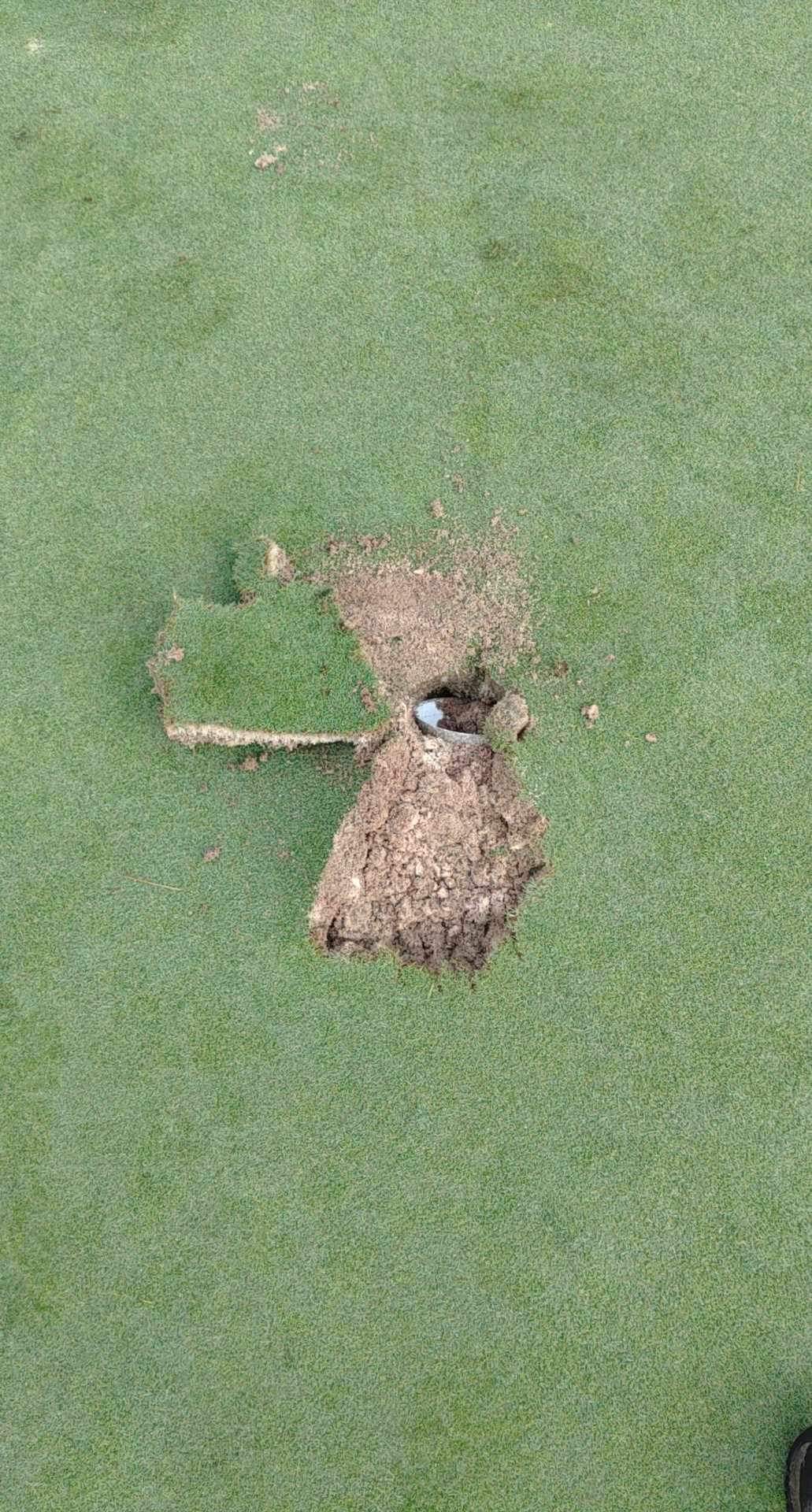
This was the scene this Saturday morning on the 13th green.  Not only did the suspect damage the hole location, but they stole the flagstick too.  I notified the authorities immediately.  The suspect is about 4-feet tall, wearing a big furry black coat (which I thought was odd for this time of year), no shoes with sharp toenails, hairy feet, and also reportedly has big nose with lots of facial hair that matches the fur coat.  In the meantime, if you see him, call the Highlands PD- who told me not to approach him.  More importantly, if you see our flagstick laying around the club campus or moving through the woods,  I need to get that back.  Be safe out there...we live in a dangerous world.

#13 Green damage

Then we got to #15 green and found this.  Same thing...as if doing it once, wasn't enough!  We are in for a long autumn season if this activity continues on the putting greens!

#15 Green damage

Fall Color Map


Friday, September 01, 2023

USGA Green Section: Ball Mark Repair Done Right

USGA Green Section Record

 CLICK HERE!

Click above for the latest edition of the Green Section Record.

Next Tuesday (September 5th)


As a reminder, the golf course and practice facility will be closed on Tuesday, September 5th for greens venting at both locations. The greens will be sand topdressed, followed by a 1/4” hollow tine aeration that will allow for oxygen exchange in the root zone. In order to accomplish all this is in one day, requires all the labor we have access to. While we apologize for the inconvenience, maintenance practices like this are a needed to ensure the long term health of our greens. The disruption from this will be minimal and following mowing and rolling, the greens will be very putt-able on Wednesday, when the golf course and practice facility reopen at normal time.  By the end of the week, you won’t know we did anything to the greens. If you have any questions, don’t hesitate to call or email.

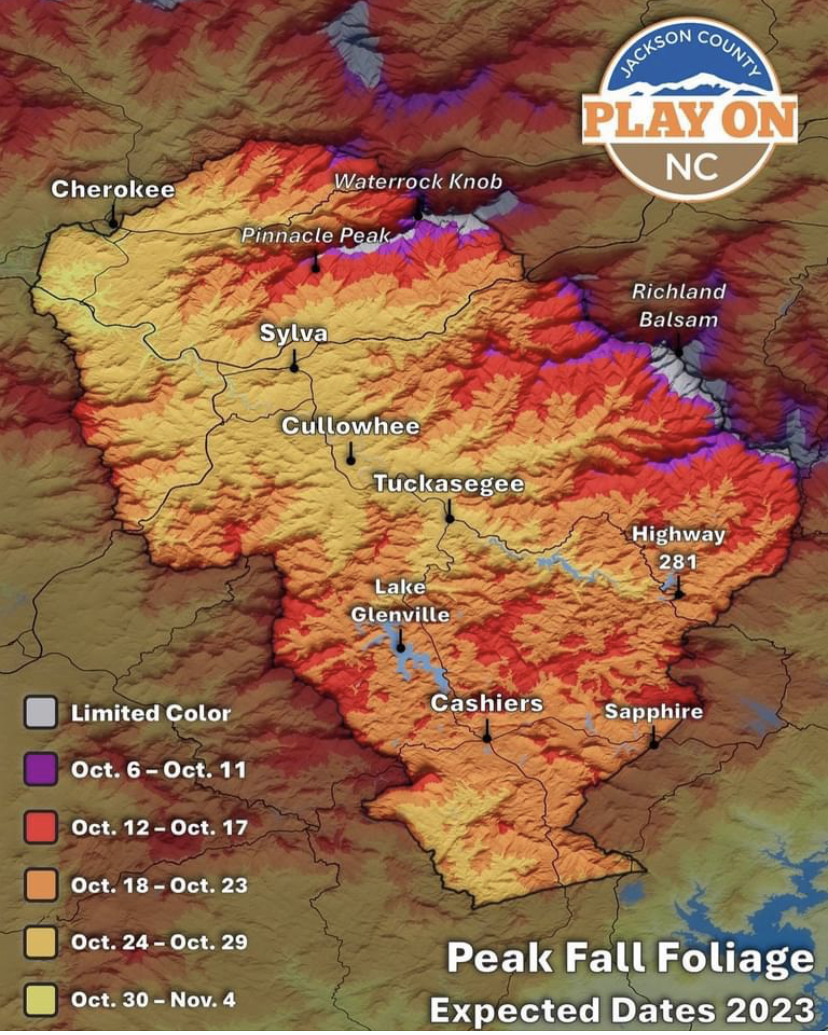
Fall Color Prediction